From Asian artists developing their careers within the Korean entertainment industry to K-pop groups expanding into other Asian markets, the region’s music industries are becoming increasingly interconnected. At The A Festival in Paris, Dear My Korea met artists whose journeys reflect this transformation.
From Korean pop music to a global entertainment model
Korean pop music (K-pop) has never developed in isolation. Its modern idol system emerged in the 1990s, drawing on Japan’s established idol industry and American music production, especially pop, hip-hop and R&B. Companies such as SM Entertainment, JYP Entertainment and YG Entertainment developed a structured approach combining talent recruitment, intensive training, music production, choreography and fan engagement. International expansion began long before BTS and BLACKPINK. In the early 2000s, BoA and TVXQ established successful careers in Japan, demonstrating that Korean artists could reach foreign audiences by adapting to local markets.
The following decade, YouTube and social media accelerated K-pop’s global expansion. Meanwhile, agencies increasingly recruited international talent, such as Lisa (BLACKPINK) and Ten (NCT), both from Thailand. Another example is Yorch, the Thai leader of POW, a five-member South Korean boy group that debuted in 2023 under GRID Entertainment. Already known as a child actor in Thailand, Yorch pursued a music career in South Korea, illustrating how K-pop attracts established talents from other Asian entertainment industries.
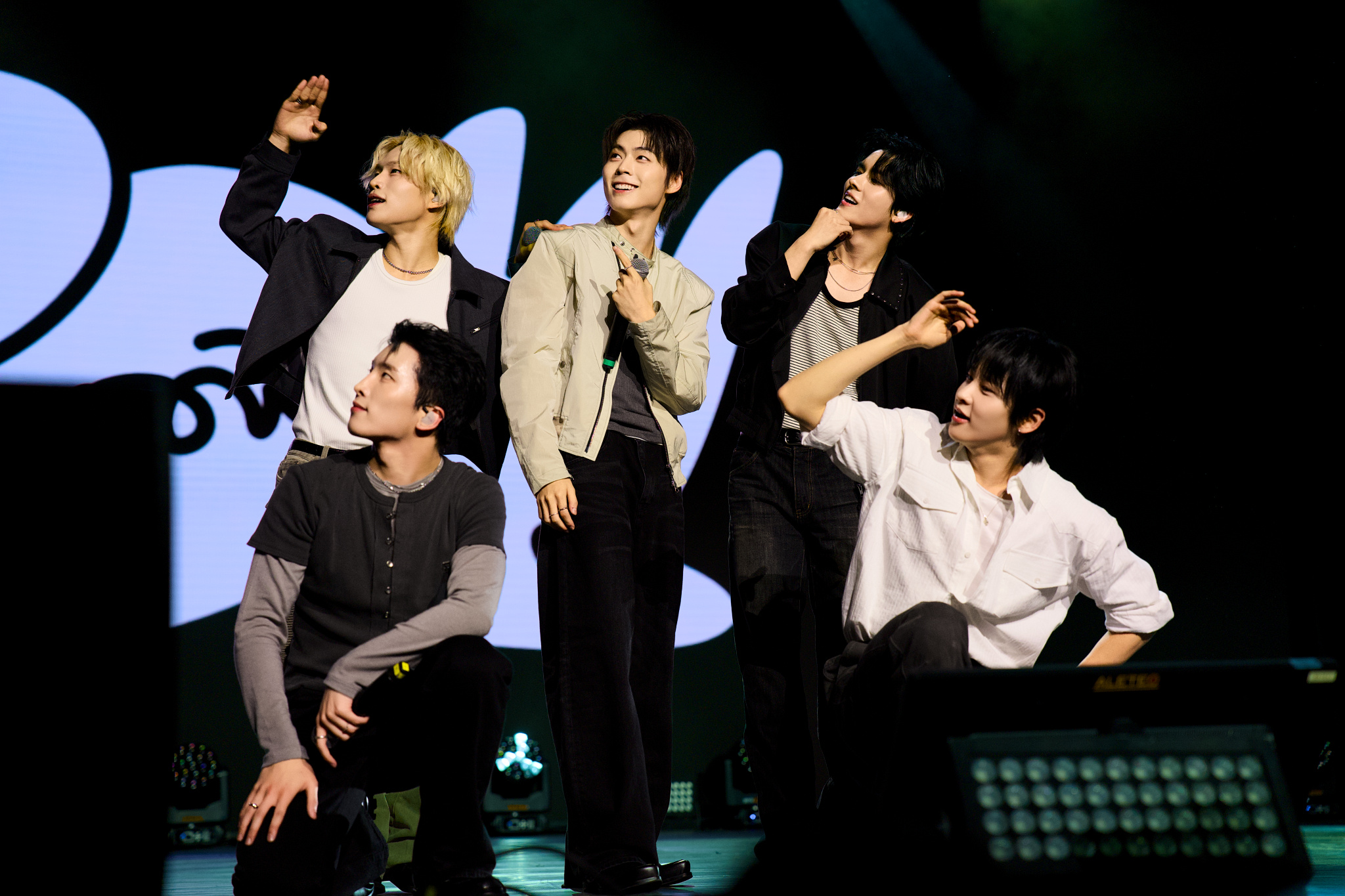
Photo: © Laure Bildstein / Dear My Korea – POW on stage, The A Festival, Paris, October 2026
By the 2020s, Korean entertainment companies were going a step further: exporting not only their artists, but also their production methods.
In Japan, JYP Entertainment launched NiziU, while HYBE developed &TEAM. In the Philippines, SB19 initially trained under a Korean-founded company before establishing its own identity within P-pop. This approach, often described as globalization by localization, combines Korean production expertise with local talents, languages and cultural identities. Rather than replacing existing Asian music industries, K-pop has contributed to their evolution while demonstrating that music does not necessarily need to be performed in English to reach international audiences.
AM8IC 엠빅: Chinese artists, a Korean production
Among the artists we encountered at The A Festival, AM8IC offers a particularly interesting example. The five-member Chinese group debuted in November 2025 under TOV Entertainment, a Korean entertainment company led by producer and choreographer Yoon Beom-no, who had previously worked extensively in China’s entertainment industry. The members trained in China with Korean instructors before continuing preparations in Seoul. AM8IC therefore combines Chinese talent with Korean training and production expertise.
But does that make them K-pop or C-pop?
The question itself illustrates how increasingly difficult it is to define Asian music industries solely by nationality.
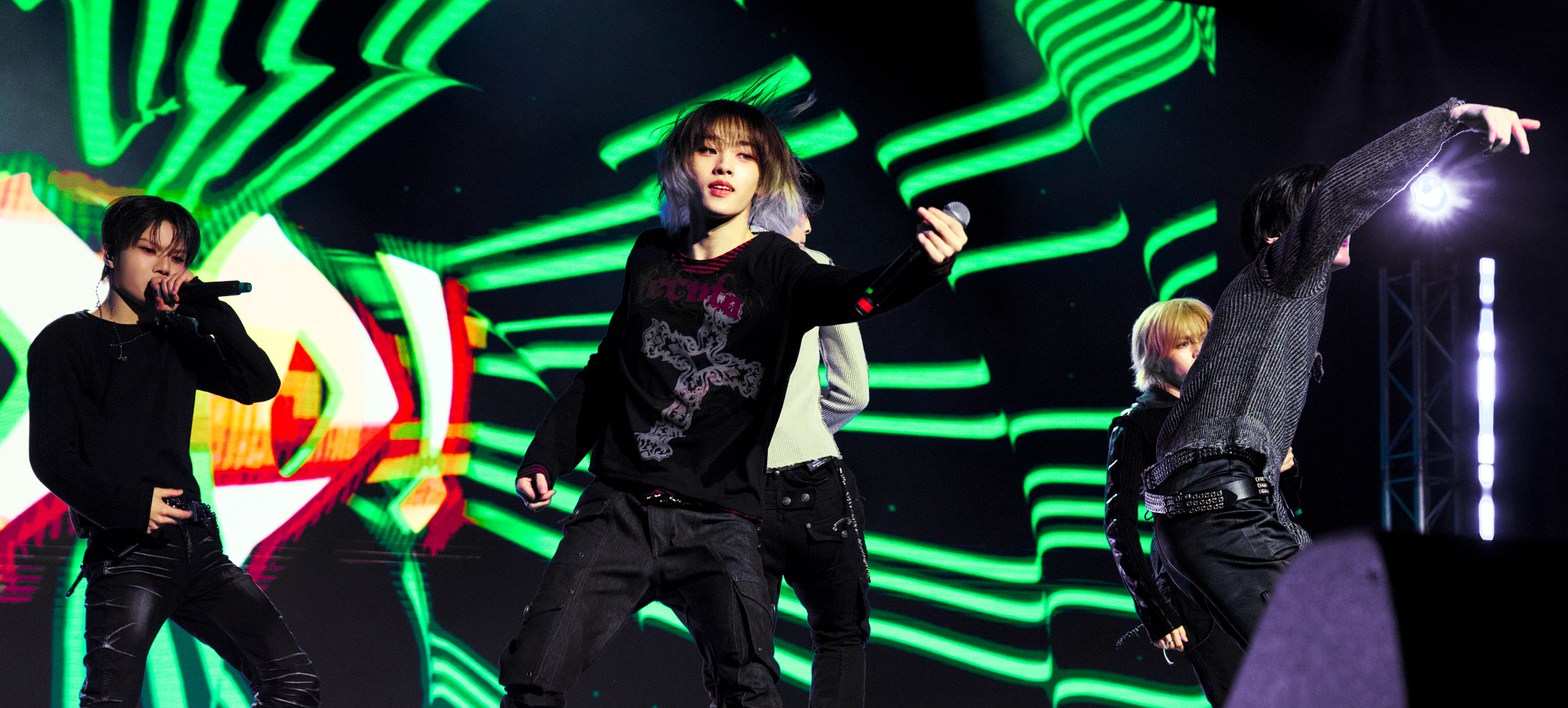
Photo: © Laure Bildstein / Dear My Korea – AM8IC, The A Festival, Paris, October 2026
Seoul: a destination for international talent
South Korea is no longer simply exporting artists. It has also become an international destination for performers seeking professional opportunities.
Jacob, the Canadian member of THE BOYZ, moved to South Korea after auditioning at 18. Despite having little dance experience, he entered the Korean trainee system and debuted with the group in 2017. His journey is far from unique: many artists of Korean descent who grew up abroad have made their way to South Korea to pursue careers in the K-pop industry, such as Mark (NCT) and Bang Chan (Stray Kids), reconnecting with their cultural roots while seeking opportunities in one of the world’s most influential music industries. At The A Festival, he presented his solo project, j., reflecting a career shaped by both his Canadian upbringing and Korean professional experience.
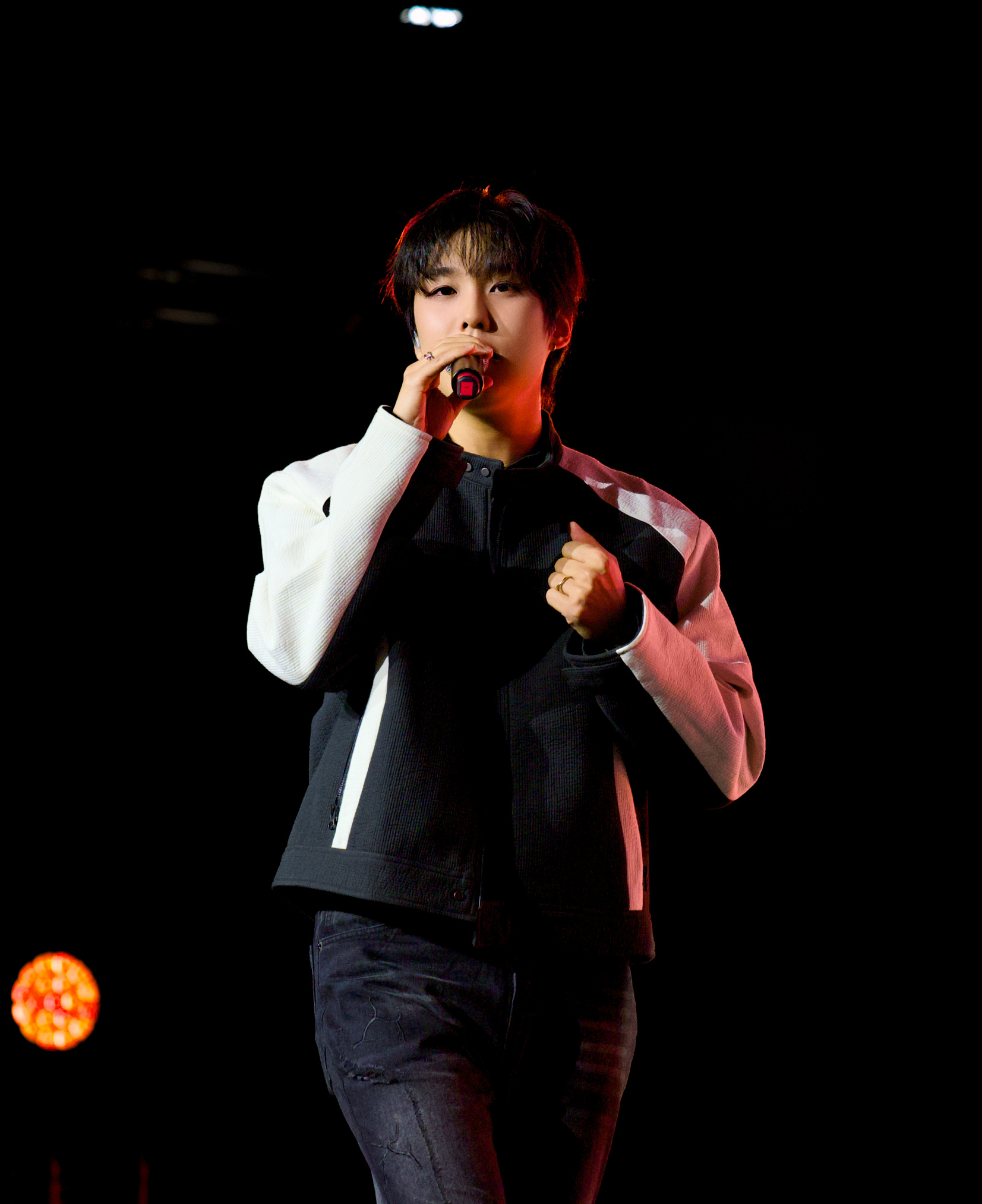
Photo: © Laure Bildstein / Dear My Korea – JACOB (THE BOYZ), The A Festival, Paris, October 2026
Hong Kong artist Sunny Lukas, whom we also met in Paris, represents another aspect of this international movement. A multilingual performer with a diverse musical background, he told us he had been living in South Korea for approximately a year and a half. His journey illustrates Seoul’s appeal beyond traditional K-pop idols, attracting artists seeking creative collaborations and access to an internationally connected entertainment industry.
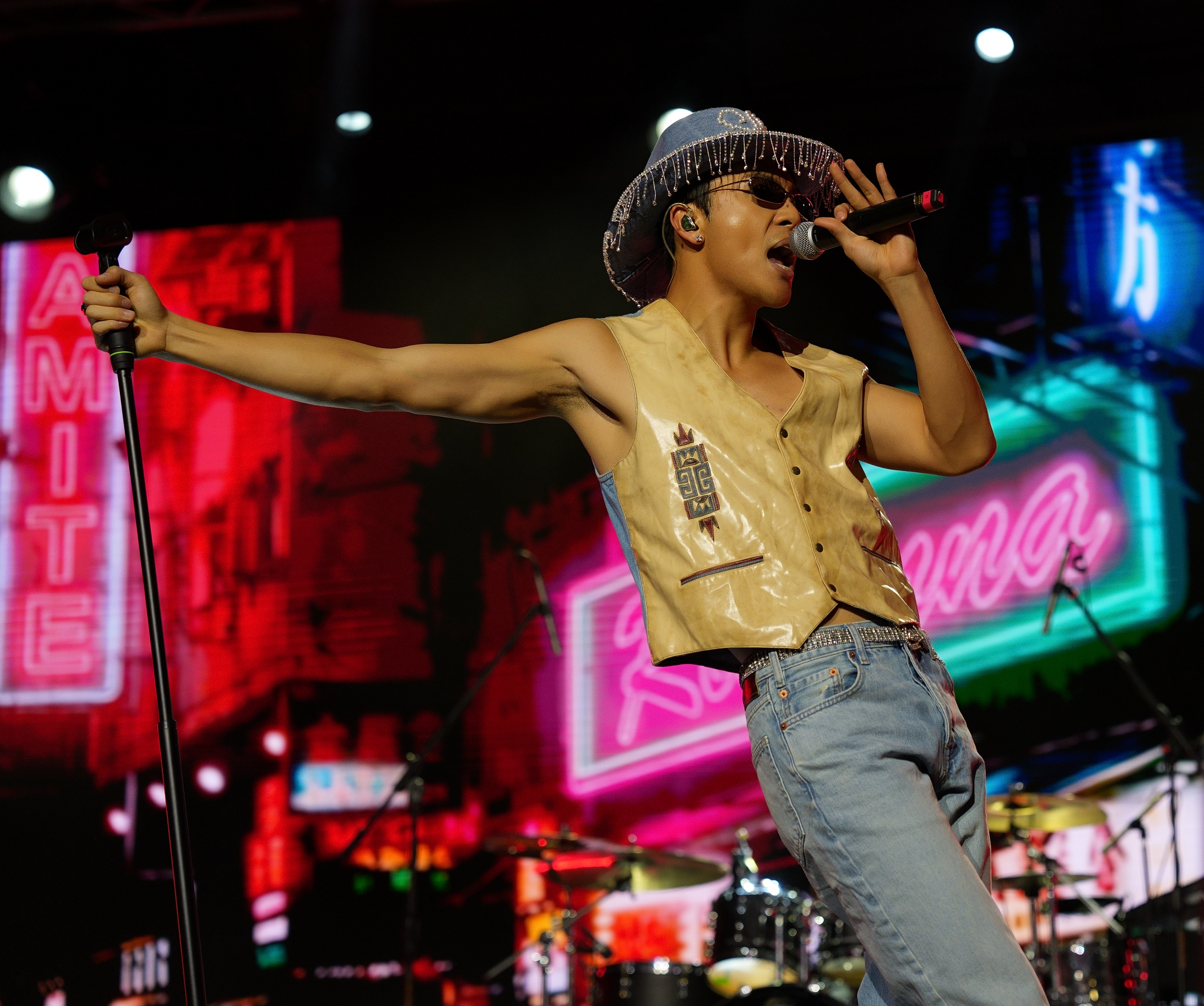
Photo: © Laure Bildstein / Dear My Korea – Sunny Lukas, The A Festival, Paris, October 2026
The A Festival: connecting Asian artists and their fans
Held in Paris on October 24–25, 2026, The A Festival welcomed over 7,000 visitors and brought together around 100 Asian artists, including singers, music groups and actors from across Asia. Under the motto “One Festival, One Community, Endless Experiences,” the festival encouraged audiences to explore different Asian music and entertainment industries, discover emerging and pre-debut artists, offered opportunities to be part of and connect with performers beyond their usual interests.
More than just a multicultural lineup, The A Festival placed emphasis on creating meaningful interactions between artists and fans.
ALAMAT: when language becomes an identity, not a barrier
Perhaps one of the most fascinating consequences of K-pop’s international success is the changing perception of language in popular music. ALAMAT takes this idea even further. Composed of six members from different regions of the Philippines, ALAMAT incorporates their six distinct Philippine languages into its music, as the members explained during our press conference at The A Festival.
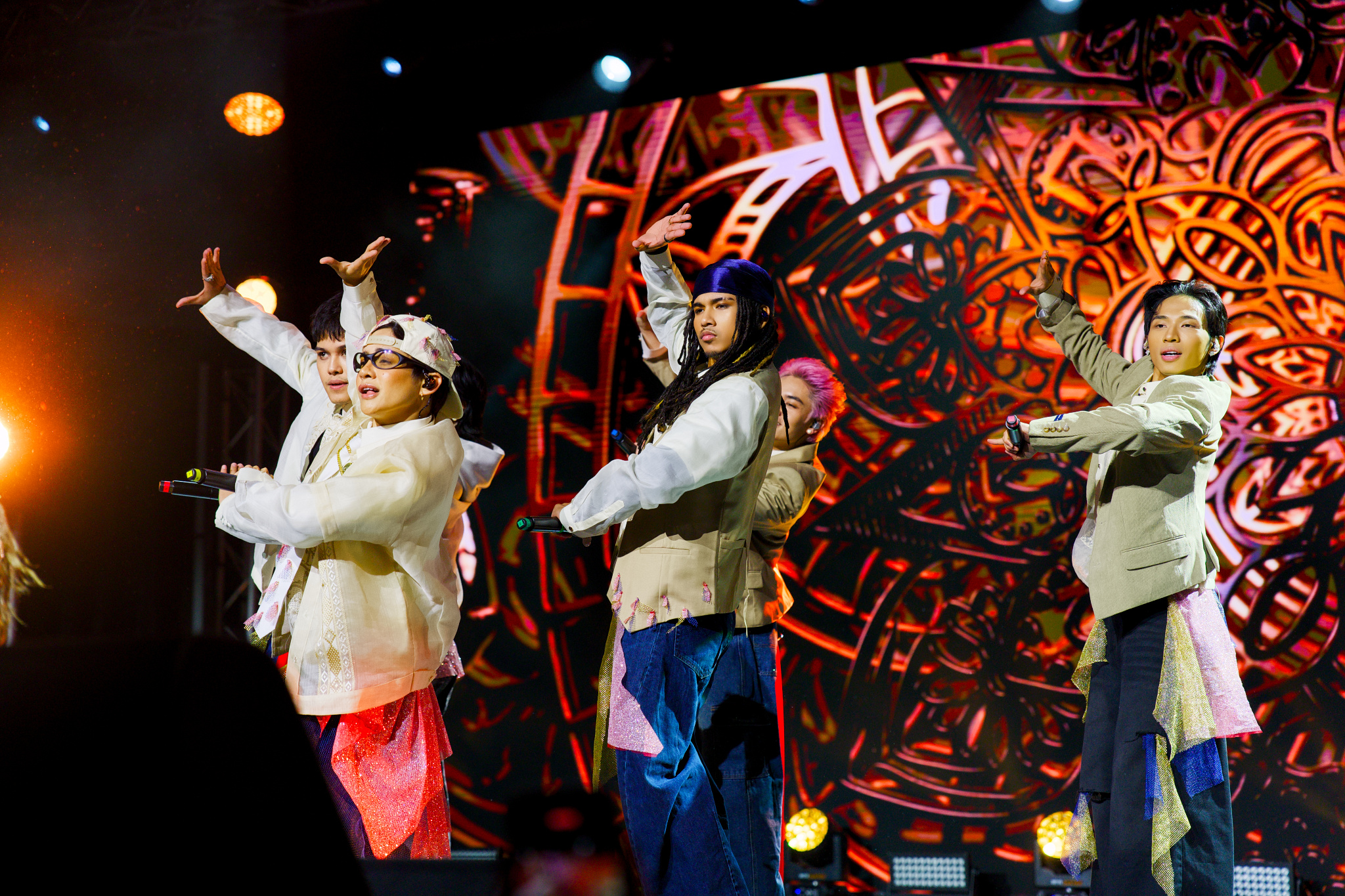
Photo: © Laure Bildstein / Dear My Korea – ALAMAT, The A Festival, Paris, October 2026
While their training and performance model draws inspiration from K-pop, their artistic identity deliberately celebrates Filipino cultural and linguistic diversity. Rather than adopting Korean or English to appeal to international audiences, ALAMAT embraces the languages and traditions of its own country.
The group illustrates an important shift: international ambition no longer necessarily means abandoning local identity. K-pop helped challenge the assumption that globally successful music must be sung in English. Artists such as ALAMAT are taking that principle further, showing how linguistic diversity itself can become a defining artistic strength.
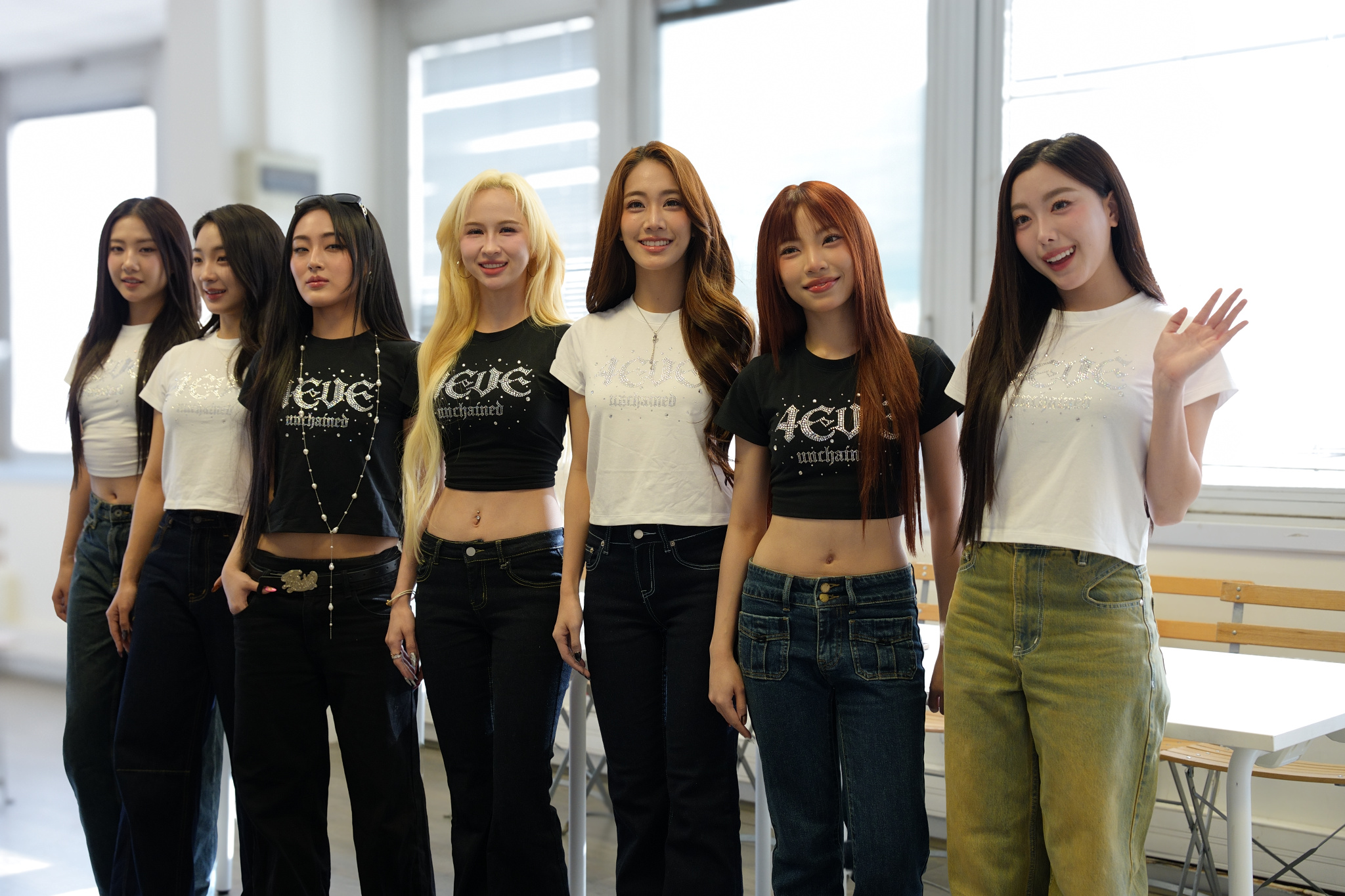
Photo: © Laure Bildstein / Dear My Korea – 4EVE (T-POP) Press Conference, The A Festival, Paris, October 2026
Thailand’s seven-member girl group 4EVE offers another example of K-pop’s influence on the region’s music industry. Formed in 2020 through the televised survival competition Girl Group Star, following a format similar to South Korea’s Produce 101, the group illustrates how the Korean idol model has influenced talent development beyond Korea. Member Aheye has cited BLACKPINK as an inspiration and previously auditioned for YG Entertainment. Beyond these influences, 4EVE has collaborated with songwriters and producers connected to K-pop, including Will Simms, whose credits include Girls’ Generation, Red Velvet, EXO and SHINee. The group has also performed in Seoul, while developing its own distinctly Thai musical identity and contributing to the international rise of T-pop.
TRENDZ: how to bring artists and fans closer together
Having toured Europe regularly since 2024, TRENDZ have developed a strong connection with their European fans. During their press conference at The A Festival, the members explained that what made their latest European tour different from previous ones was the additional time dedicated to interacting with fans beyond their performances.
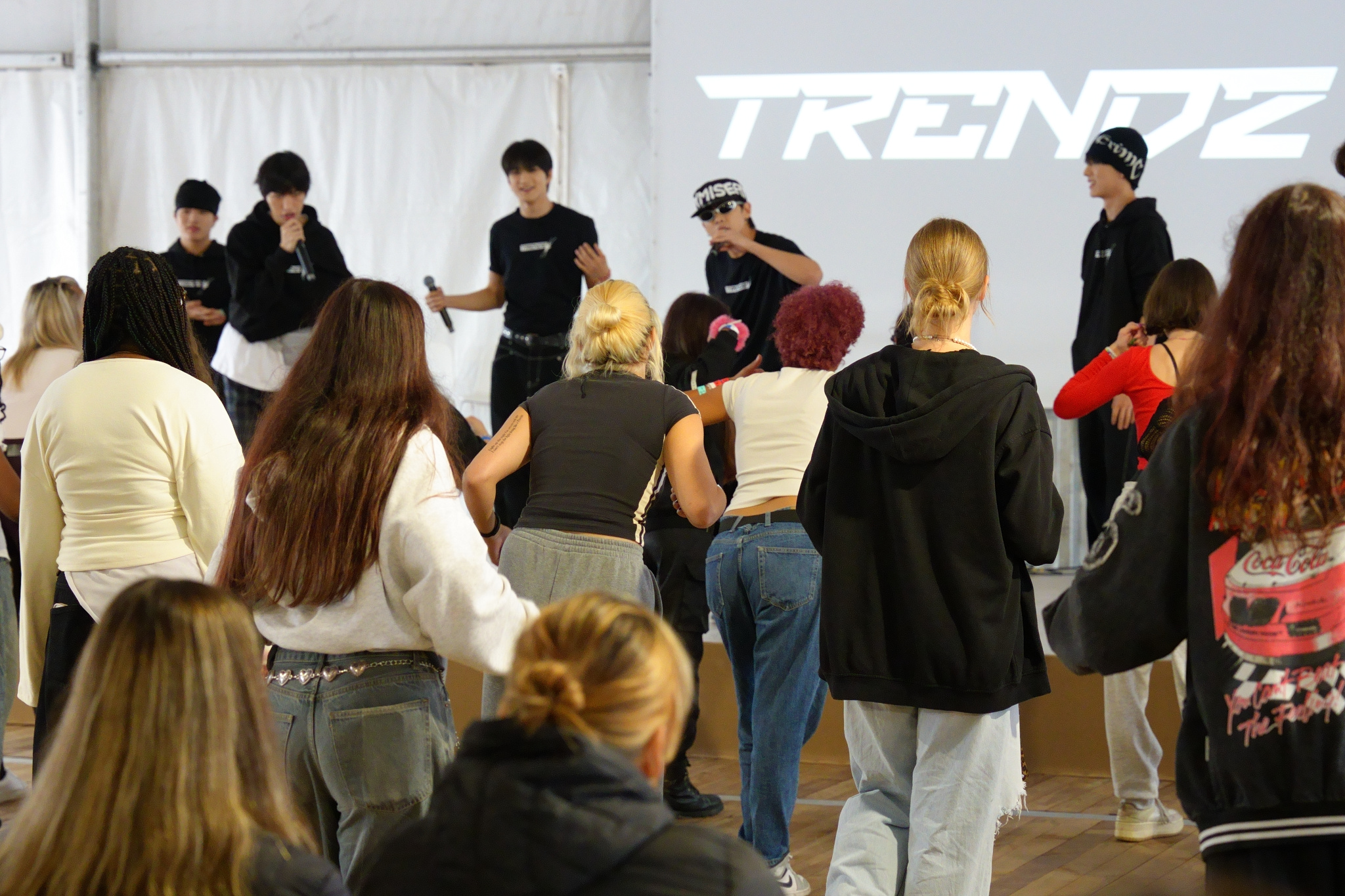
Photo: © Laure Bildstein / Dear My Korea – TRENDZ, Dance Workshop, The A Festival, Paris, October 2026
At The A Festival, this translated into their participation in the Random Play Dance (RPD), a dance workshop, merchandise sales and exclusive fan benefits, giving audiences more opportunities to connect with the artists beyond their stage performances.

Photo: © Laure Bildstein / Dear My Korea – TRENDZ at their booth, The A Festival, Paris, October 2026
While festivals such as KCON already offer immersive fan experiences, including opportunities to perform alongside K-pop idols, The A Festival brought together a diverse range of activities across several Asian entertainment industries. Beyond concerts, Random Play Dance sessions and artist workshops, visitors could attend cultural and industry talks, audition to dance alongside performing artists, or even apply for a role in a Thai drama filmed in Paris. This combination of music, screen entertainment and direct audience participation was one of the defining features of its first edition.
The A Festival also introduced audiences to emerging Thai acting talent, including pre-debut artist Tarm, presented alongside fellow actors from Maiosi-am Entertainment. Beyond meeting the actors, fans had the opportunity to audition for a role in a Thai drama filmed in Paris, offering a rare chance to step in front of the camera and act alongside the performers they had just discovered. More than simply bringing fans closer to their favourite artists, the festival gave them the opportunity to become part of the entertainment experience themselves.
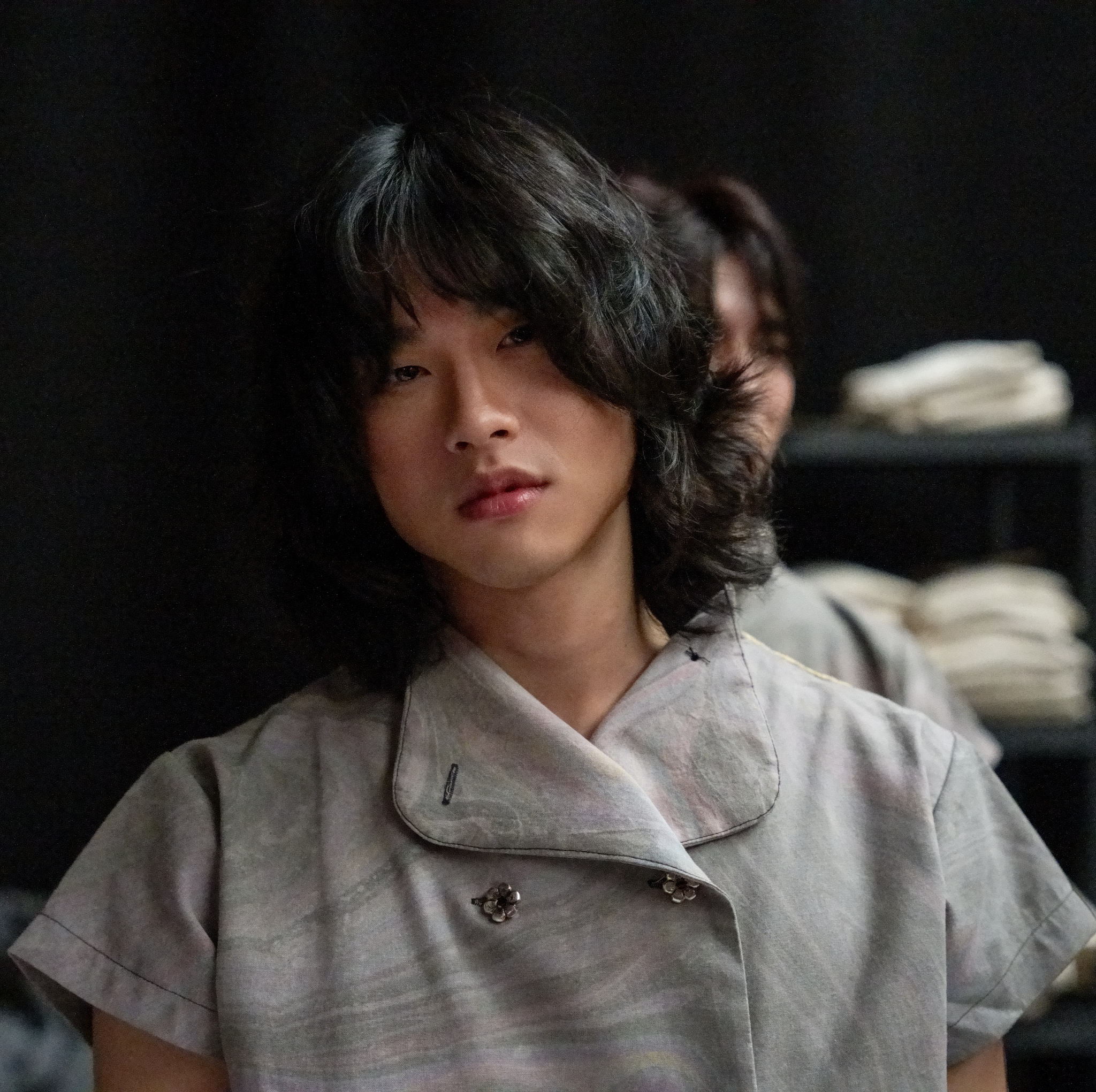
Photo: © Laure Bildstein / Dear My Korea – Tarm (Pre-debut Actor), The A Festival, Paris, October 2026
Special thanks to Envol Prod, 5 oceans studio, Emmanuelle Amelin and Marie-Pierre Médouga for giving Dear My Korea the opportunity to discover, meet and connect with so many talented artists from across Asia.
And a big thank you to our partners and collaborators K-POP Schweiz and Physiotherapist Melinda