There are multiple forms and styles of dance in Korean culture, though, broadly speaking, they can be divided into two categories: folk (rural or “low class”) and court (official, royal, “Confucian” or “high class”).
The former category eventually became the one that defines Korean dance as a whole in popular perception, not least because it was produced and practiced by the majority of the populace – specifically land-tillers and those of “unclean” occupations (butchers, leather-makers, etc).
The masked dance (Dalchum 탈춤) and “farmer’s music” (Nongak 농악) had distinct purposes behind them, including encouragement of farming work, collection of alms, or re-enactment of historical events or religious (typically “shamanist” or Buddhist) rituals, but what engages modern imagination the most is the color and dynamism inherent in all of these dances, though there are multiple variants that embrace more solemn rhythms and attitudes, such as the Salpurichum 살풀이춤 (Exorcist’s Dance) or Ilmu 일무 (line-dancing).
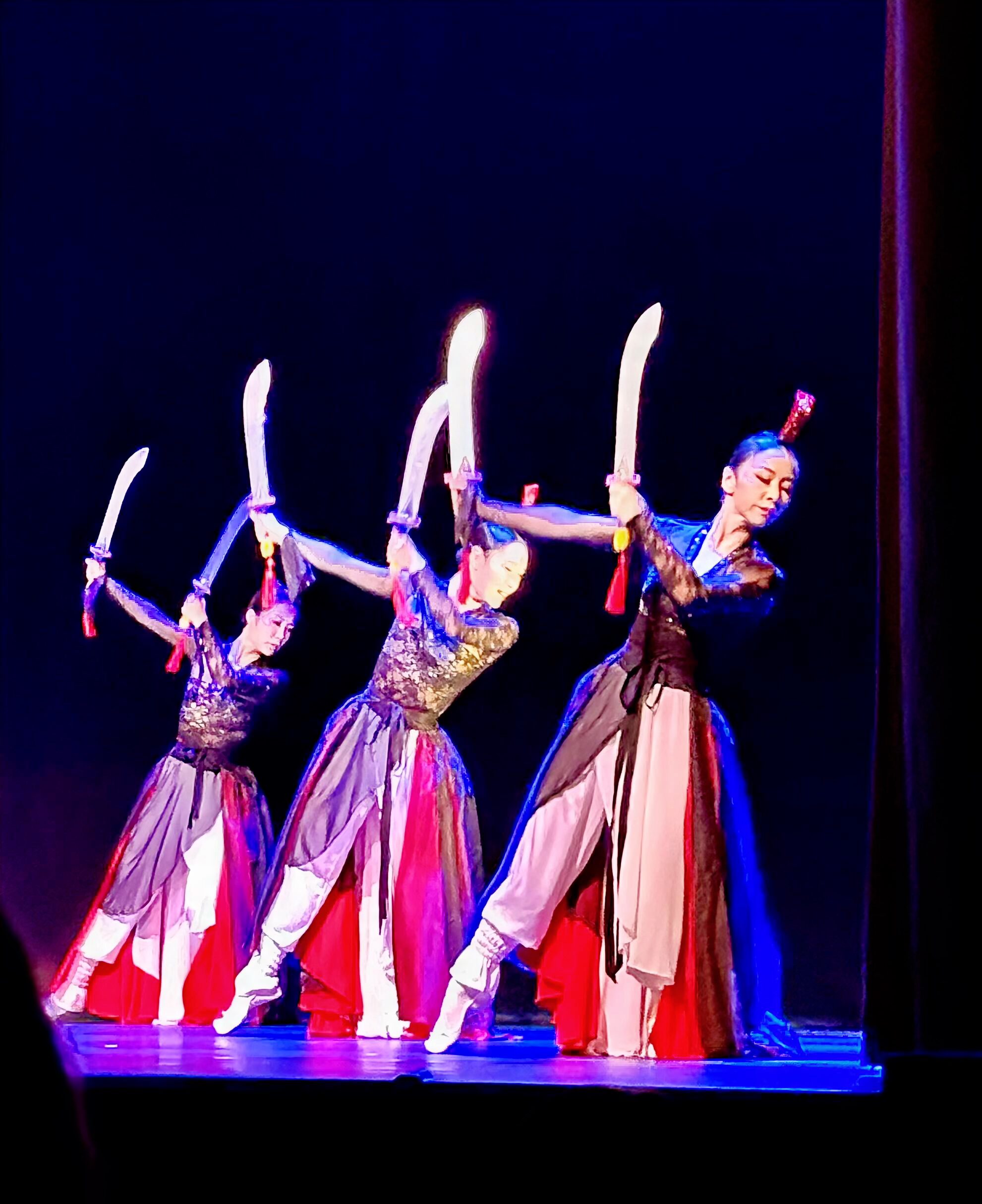
Gyeonggido Dance Company – 19 September 2023 – KKL Luzern
About Samulnori
The case of samulnori (사물놀이) is particularly interesting because, although it may seem like an ancient tradition, samulnori in its current form is actually relatively recent. It was developed as a stage performance genre in 1978, drawing on much older Korean folk traditions.
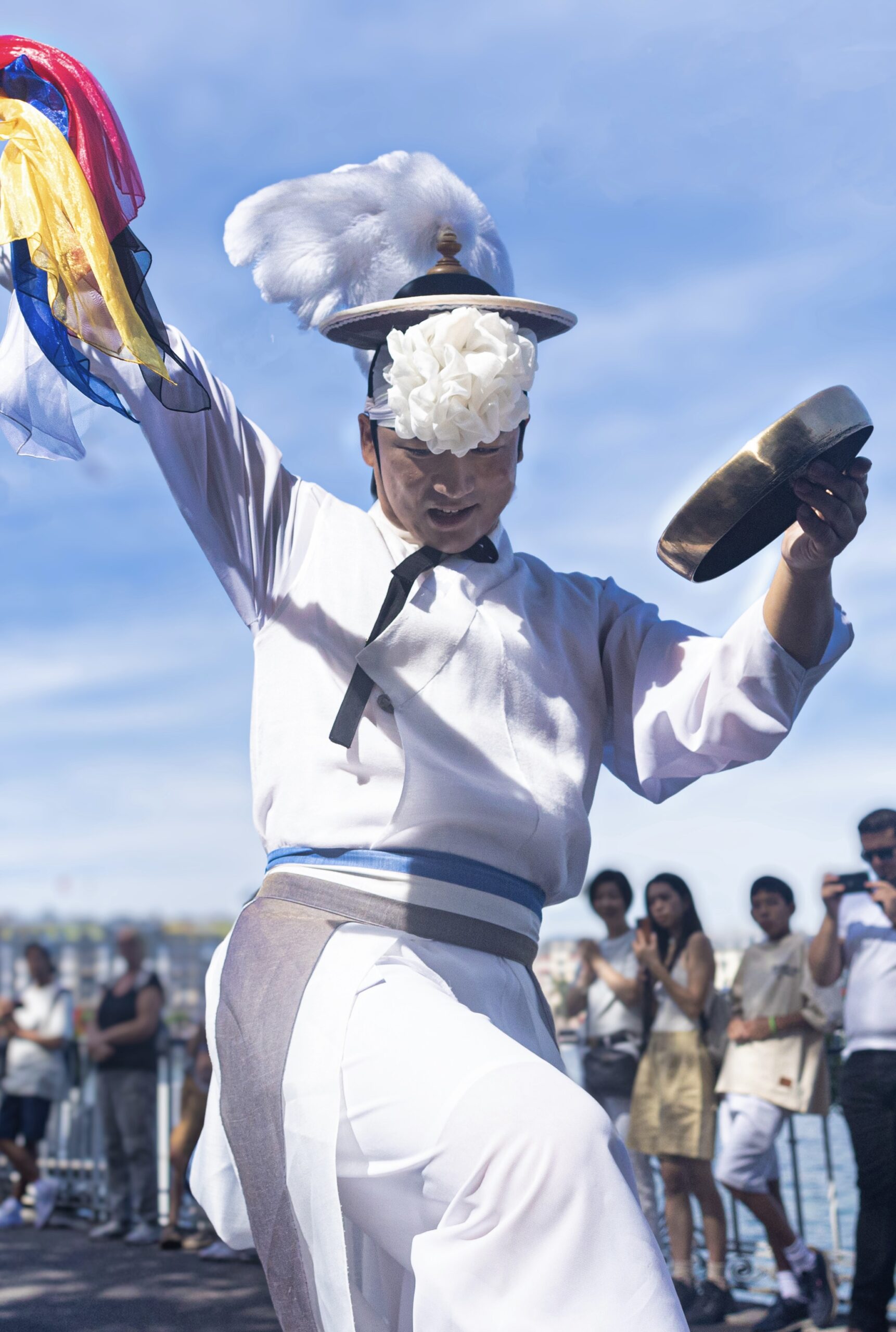
© Pèpète aux allumettes – Samulnori in the streets of Geneva
Furthermore, women’s dance styles have bridged the gap between rural and court categories during the period of Neo-Confucianism’s domination, and there have also been the so-called “sword dances” (Geommu 검무) in existence, which directly connected with the martial spirit of Koreans.
Above all, though, both the “high” and “low” traditions of Korean dance have one thing in common – the “Han”. The authenticity of emotional expression, which may be likened to the ancient Greek notion of “katharsis”, lies at the forefront of nearly all performative forms of artistic expression in Korea.
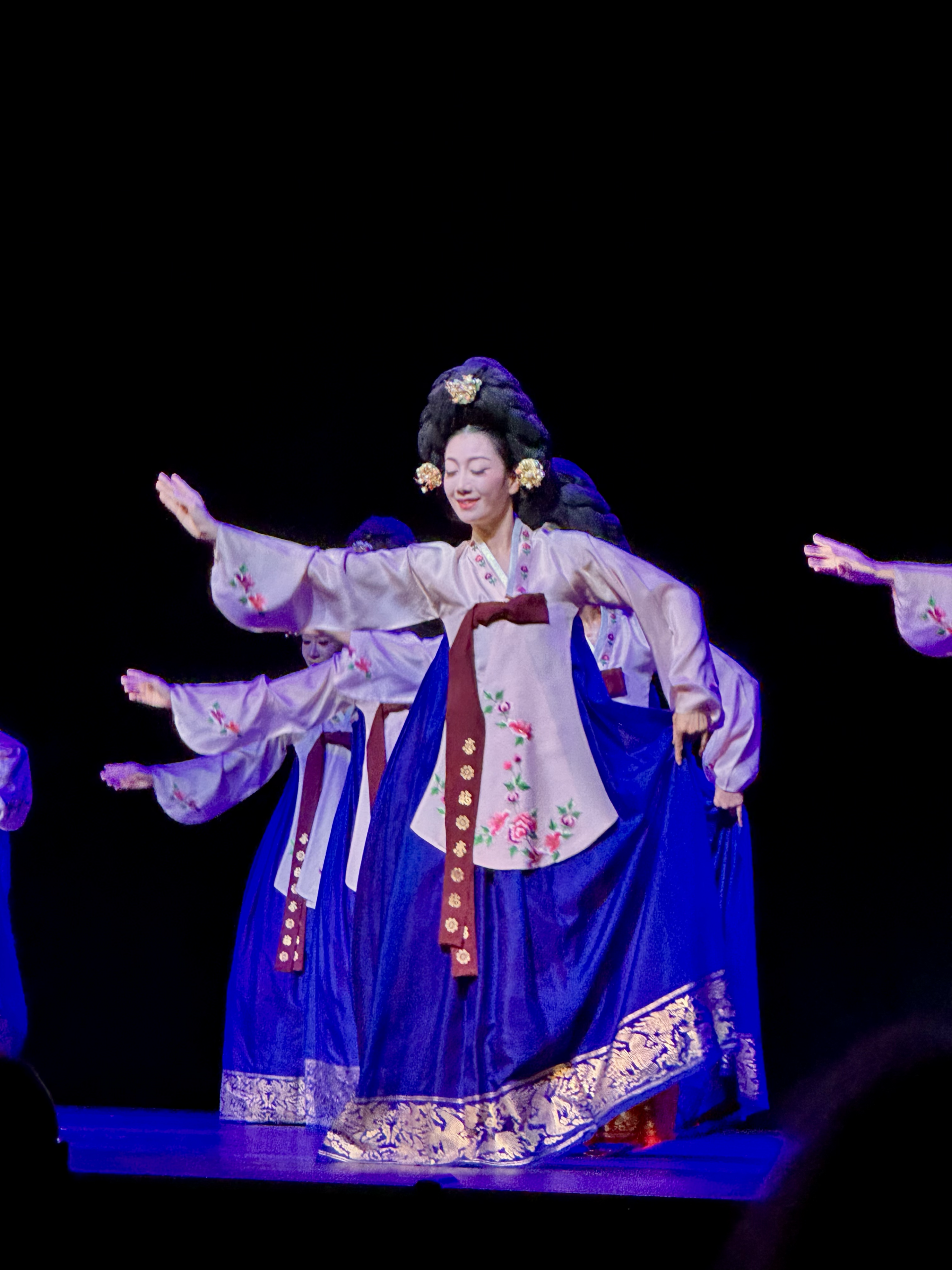
Gyeonggido Dance Company – 19 September 2023 – KKL Luzern
During the festival weekend, you will have the opportunity to discover several styles of Korean dance, both traditional and modern, that carry on this spirit.
Through talks, demonstrations and introductory sessions, immerse yourself in the world of Korean dance, from traditional forms all the way to K-POP dance. Discover the full programme on our dedicated festival page.
For an even more immersive experience, you can purchase a ticket for the “Immersive Experience” workshop, where you will have the opportunity to wear a traditional hanbok: discover what is in it.
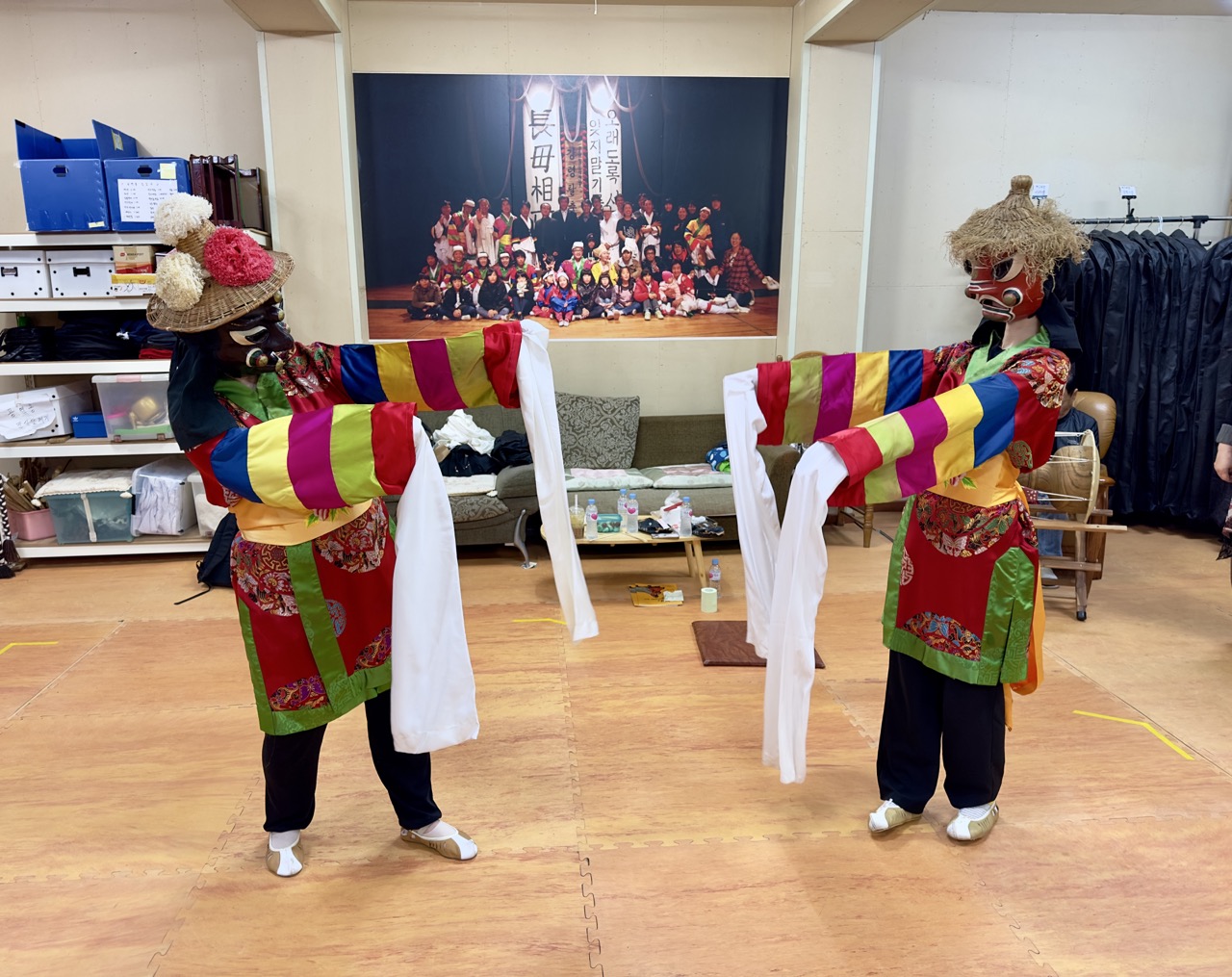
Talchum Outfits – Talchum in a style originating from what is now North Korea