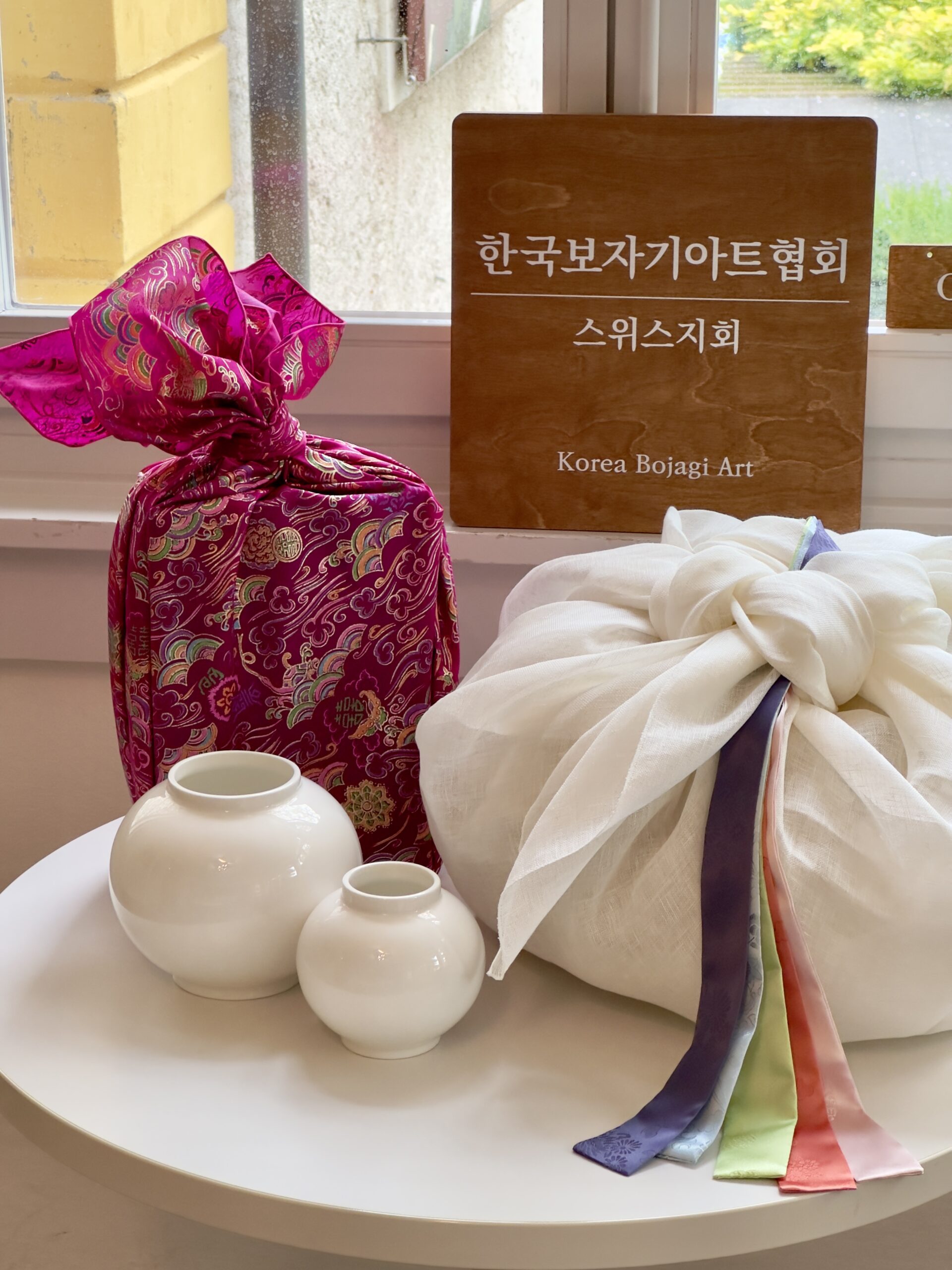
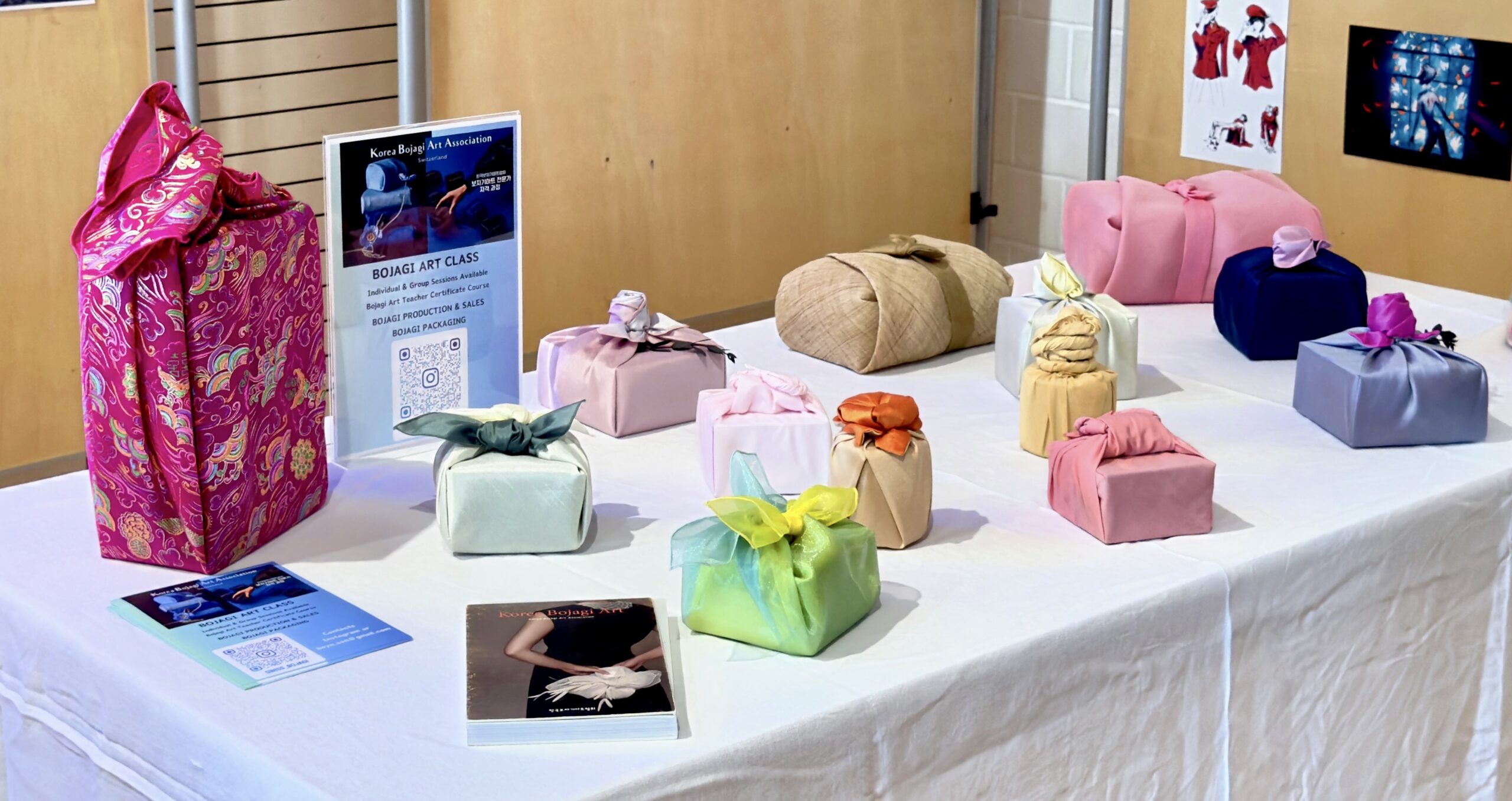
Ever wanted to pack things in style? With the traditional Korean art of bojagi, you can do it easily and avoid environmental waste. The ancient techniques of preparing and bending cloth (dating, at the very least, to Goryeo era, 932-1391 AD) allow us to cut down on plastic and add the spirit of humility and gratitude to any gift you want to present to your significant other.
In this course, you will learn about the bojagi, and also immerse yourself in the cultural origins of this tradition. Did you know that the type of cloth used reflected social divisions at a time? Well-to-do families (think yangban nobles or jungin “specialists”) favored using singular cloths for wrapping, while less affluent (from poor lineages or the commoner stratum) individuals often found it necessary to cut and sew several different pieces together into the so-called jogakbo, which with time started to be seen as lucky on its own. In the modern day, however, you can practice these and other forms of traditional Korean art of sewing without fears of breaching customs. The instructor, Son Bo Young, will tell you the ins and outs of the work, so you can comfortably practice on your own. Additionally, you can meet the fellow fans of the bojagi and perhaps affiliate yourself with Switzerland’s chapter of the Korean Bojagi Art Association.
So what are you waiting for? Register for the next event
Tomasz Sleziak is a scholar in Korean studies (particularly Korean but also global Confucianism) and Posthumanism, conducting research on Confucian socio-legal and metaphysical discourse throughout Korean history, as well as its placement within the global humanist discourse. He completed his PhD (dissertation: “Conceptual Framework of Late Joseon Social Mobility, Legal Systems and Confucian Heritage”) in Korean Studies at London’s SOAS after having achieved his Master’s Degree at Adam Mickiewicz University in Poznan, Poland. He has cooperated with such institutions as the Academy of Korean Studies, University of Zurich, Harvard-Yenching Institute, Ruhr-University Bochum and Oxford House Research. He has also published multiple papers as well as facilitated Korean Studies panels across multiple conventions and conferences globally. Overall, his main topical field is the influence of traditional Confucian thought on social superstructure, legal codes and humanistic as well as Posthumanist trends in Korean Peninsula and Sinophone cultural sphere.
Contact: 615200@alumni.soas.ac.uk